The World Changed in the Last Month. Your Customers Now Have Agents.
By Beant Singh. Covers Oct 15 to Nov 15, 2026. Product availability, plans, and regions are as of Nov 15, 2026.
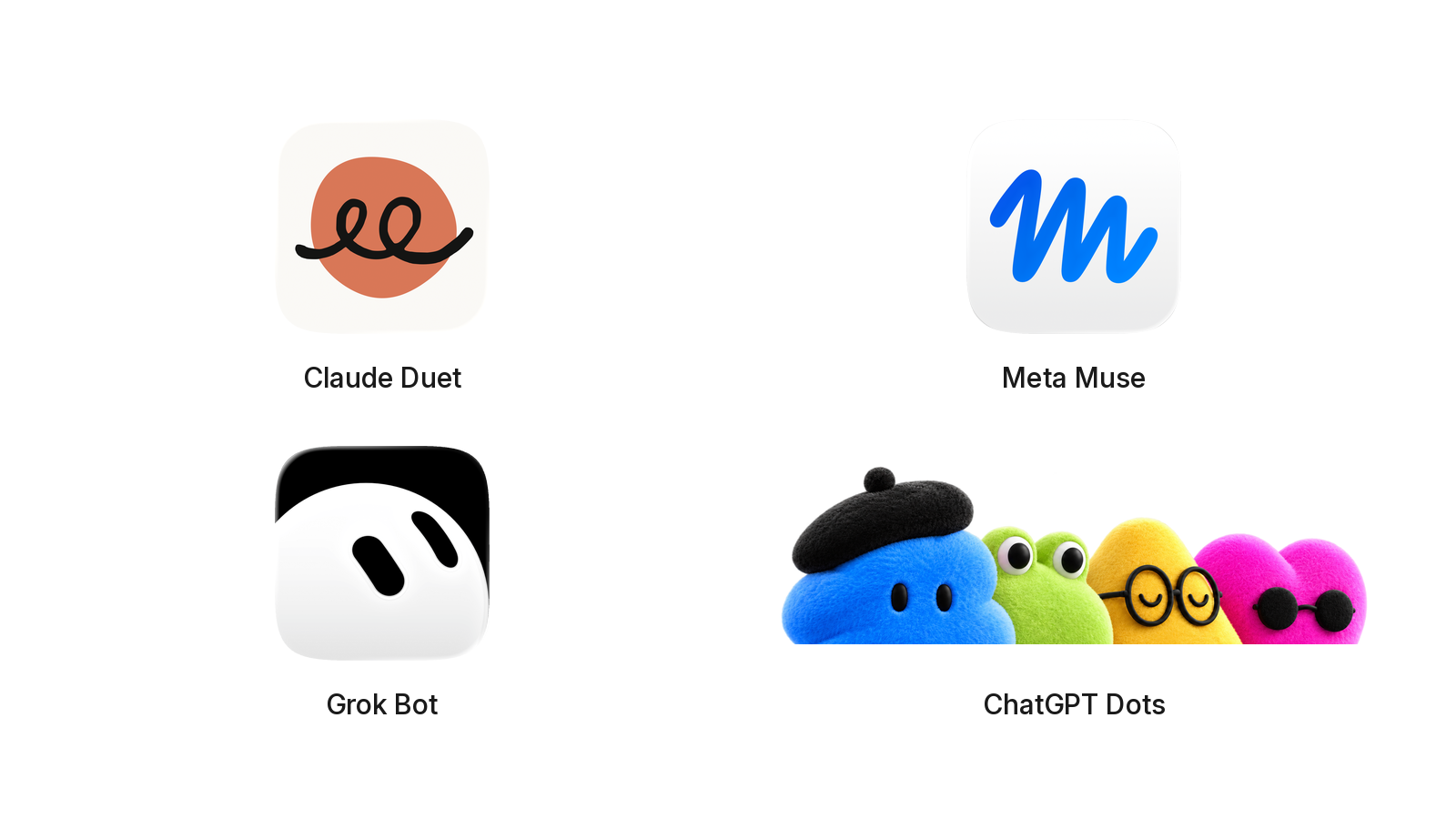
Image: composite of official marks from Anthropic, Meta, xAI, and OpenAI
Between October 15 and November 15, 2026, OpenAI, Anthropic, Google, Meta, and SpaceXSI shipped a wave of personal-agent features. Not chatbots. Agents. Software that watches your apps, makes phone calls, shops, joins meetings, and comes back to you with the work done and a question about what to approve.
I went through the official announcements and left out the hype, the funding news, and anything I couldn't confirm at the source. What's left is still a lot.
This isn't a sales pitch. It's a map. I want every business owner and every person on a team to understand what their customers can now do, and what that means for how we serve them.
What is an AI personal agent?
An AI personal agent is software that watches your apps, makes phone calls, shops, joins meetings, and comes back to you with the work done and a question about what to approve. A chatbot waits for you to ask. An agent goes and does the task, and most of the agents below check with you before sensitive steps like paying or sending a message.
What can a regular person do now that they couldn't do a month ago?
Forget the model names for a second. This is what launched, in plain English.
Have an assistant check in with you every morning. Claude Duet sends a short morning brief on the most important items across your connected apps, then messages you during the day only when something needs you.
Let an agent buy something for you, with your approval. ChatGPT Wallet lets a US ChatGPT Pro user's dot complete a purchase. You review the items, total, and card, then approve with Face ID or a fingerprint. The agent never gets your real card number.
Ask your bank data real questions. Gemini users in the US can connect Google Wallet and ask things like what subscriptions they're still paying for and whether any went up in price. Google says Gemini "can only read information from your accounts; it can't move, manage, or invest your money."
Have an agent make a phone call for you. Elon Musk wrote on Oct 25 that Grok Bot "can now call someone or a business for you, make a request on your behalf, take notes on the response and send you a note summarizing the conversation."
Talk to a business's own AI inside ChatGPT. When ChatGPT mentions a business that has a Business Agent, a person can open its profile and start a separate, clearly labeled chat with that business's agent.
Text your agent like a friend. ChatGPT Pro users in the US can now reach their dot through iMessage or RCS, with text, photos, and voice messages.
Bring an AI into the meeting. Claude can join a Google Meet call as a visible participant and write the notes and action items. Grok Bot can join Google Meet, Zoom, or Microsoft Teams calls on Team, Enterprise, and Ultra plans.
Let the agent use your phone and computer apps. Grok Bot can now use Calendar, Reminders, Contacts, and more on iOS and Android, and on Mac it can use Messages, Mail, Notes, Reminders, Calendar, Location, and Contacts.
Read that list again and picture your customer. A month ago, they called you, filled out your form, or searched Google. Now a growing number of them can send an agent to do it.
Your business now has two kinds of customers
This section and the next one are my view as a business owner, not claims from any AI company.
You now serve two groups at the same time, and you can't drop either one.
Customer one uses an AI agent. Their agent researches you in ChatGPT, compares your offer against three others, calls your office to ask a question, and may try to check out on your website. If your information is wrong, your site blocks the agent, or nobody answers the phone, the agent moves on. It doesn't get frustrated. It just picks someone else.
Customer two does it the old way. They call, they text, they walk in, they want to talk to a person. Plenty of people will stay here for years, and they deserve the same great experience they've always had.
So the job isn't "replace everything with AI." The job is to be easy to find, easy to understand, and easy to buy from, whether a human or an agent shows up.
How do you get your business ready for AI agents?
In practice, that means six things:
Make your information accurate everywhere. Hours, prices, services, policies, and product details. Agents read what's published. If it's stale, they repeat stale information.
Claim your profile where people now search. OpenAI now lets eligible businesses claim and verify their business in ChatGPT and see how often they're mentioned and clicked.
Don't accidentally block agent buyers. OpenAI's own guidance tells businesses to make sure site security and risk tools aren't blocking legitimate agent purchases.
Answer the phone, every time. If agents can now call businesses on someone's behalf, a missed call is a missed customer, whether a person or an agent dialed.
Keep a human path open. For the customer who wants a person, make that easy too. The goal is both, not one or the other.
Use the same tools yourself. Every capability your customers got this month, your team can use to run the business better. That's the second half of this article.
The honest risk
I'm not going to tell you AI will put you out of business next quarter. Nobody knows that, and I don't like fear-based content.
What I do believe is this: when buying behavior shifts, the businesses that are hard to reach get passed over a little at a time. A few lost leads. A few customers who chose the competitor that answered faster or showed up correctly in ChatGPT. It doesn't feel like a crisis. It feels like a slow month, then another one.
Over time, that kind of slow leak can turn into real challenges for a business, and for some, those challenges eventually lead to closures. Not because the owner did anything wrong, but because the way customers find and choose businesses changed, and the business didn't change with it.
The good news is the fix isn't mysterious. Most of it is getting your information right, being reachable, and putting these same tools to work inside your own business.
What launched between October 15 and November 15, 2026?
These are the 16 updates worth knowing from the last month, top five first. For each one: what's now possible, what it means, and one way a business could use it. Every "business use case" below is an example scenario I made up to show the idea, not a real customer story.
1. ChatGPT Business Hub and Business Agents (OpenAI, Nov 10)
Video: OpenAI
What's now possible: Businesses can claim their organization in ChatGPT through Business Hub and, once verified, update key details and add product feeds with pricing and availability. Business Hub shows aggregated insights like the number of mentions and website clicks a business receives. Eligible ecommerce and online service businesses in the US can also build, test, and launch a Business Agent that customers can chat with in a clearly labeled conversation, separate from ChatGPT's own answers. OpenAI says this connects businesses with "the 1.2 billion people who use ChatGPT each week."
What it means: ChatGPT is becoming a place where people discover and choose businesses, a lot like search. Your profile there can now be accurate and managed by you, instead of whatever ChatGPT pieced together.
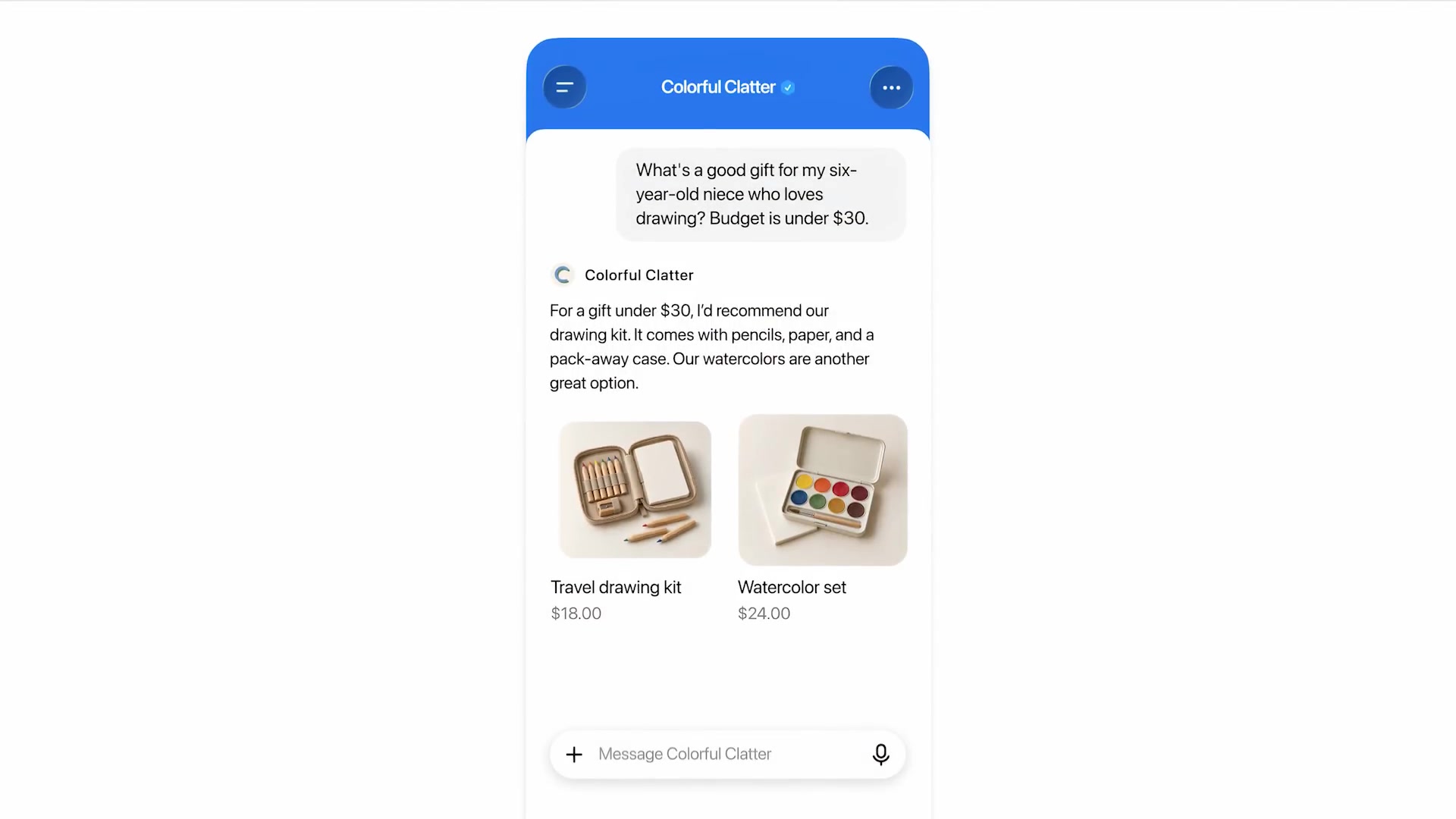
Image: OpenAI (still from the official video; Colorful Clatter is OpenAI's sample business)
Business use case (example scenario): An online skincare brand claims its profile, uploads a product feed with current prices and stock, and launches a Business Agent trained on its ingredient list, shipping times, and return policy. When a shopper asks ChatGPT which moisturizer works for sensitive skin, the brand shows up with correct details and a way to ask follow-up questions.
2. Claude Duet (Anthropic, Oct 23, waitlist research preview)
Image: Anthropic
What's now possible: Claude Duet is a new app where Claude works as a proactive agent. Anthropic wrote, "We built Claude Duet for professionals and small business owners with more on their plates than they can track." It sends a morning brief, checks connected apps every few hours, and can check QuickBooks or Stripe for unpaid invoices, prepare Gusto payroll, and draft HubSpot follow-ups. Before it sends a message, makes a payment, signs a document, or deletes anything, it shows you exactly what it's about to do and waits for your approval. It's a waitlist preview for US Pro, Max, and Ultra subscribers.
What it means: The AI isn't waiting for you to ask anymore. It comes to you with what needs attention. That's a different relationship with software.
Business use case (example scenario): A small property management company connects Gmail, QuickBooks, and its calendar. Each morning the owner gets a brief: two unpaid invoices with reminder drafts ready, a showing double-booked on Thursday, and a vendor email that needs a reply. The owner approves the reminders from their phone in two minutes.
3. ChatGPT Wallet (OpenAI, Nov 13)
Image: OpenAI
What's now possible: ChatGPT Wallet lets a dot (OpenAI's always-on agent) pay on a user's behalf. The user reviews the items, total, and card, then approves with a security check like Face ID or a fingerprint. The payment network issues a token, so the real card details aren't shared with the business or the agent. It's rolling out first to ChatGPT Pro subscribers 18 and older in the US, with American Express, Mastercard, and Visa. OpenAI also published a Commerce Partner Playbook for businesses.
What it means: Agents can now complete a purchase, not just research one. OpenAI is direct about the catch for businesses: "Some sites may unintentionally block purchases through ChatGPT Wallet or other agentic payment products."
Business use case (example scenario): An online pet supply store asks its developer and payment provider to follow OpenAI's playbook: make sure the firewall recognizes signed agent requests, check that fraud tools don't decline legitimate agent purchases, and keep the product feed current. When a customer tells their dot to reorder dog food, the order goes through instead of failing at checkout.
4. Grok Bot 1.0 (SpaceXSI, Nov 11)
Image: xAI / SpaceXSI
What's now possible: SpaceXSI calls Grok Bot 1.0 "a major update to our AI teammates." Bots can be shared with a team, work in Slack and Microsoft Teams, and join video calls. They can "recognize work that needs to be done and offer to take it on." What teammates teach a Team Bot waits for the owner or a manager to approve before it sticks. Bots "ask before taking sensitive actions."
Video: SpaceXSI
What it means: The AI is moving from a personal assistant to a team member that everyone on the team works with, and that gets better as the team teaches it.
Business use case (example scenario): A 12-person marketing agency shares one bot with the whole team in Slack. It joins client calls, sends the recap and action items afterward, and follows up on tasks nobody claimed. When an account manager teaches it the agency's report format, the owner approves that learning, and every teammate gets reports in the right format from then on.
5. Gemini + Google Wallet (Google, Nov 13)
Image: Google
What's now possible: All Gemini app users in the US can connect Google Wallet, and optionally link bank and credit card accounts through Plaid, to ask questions about spending, budgets, and subscriptions. Gemini can find recurring charges and flag price increases. Google says Gemini "can only read information from your accounts; it can't move, manage, or invest your money."
What it means: Personal finance help that used to need an app, a spreadsheet, or an advisor is now a question in a chat. Your customers will get used to asking.
Business use case (example scenario): A solo bookkeeper uses this with her own accounts to see how it answers, then builds a simple monthly "subscription and spending check-in" service for clients who want a human to review what the AI flagged and decide what to cut. Read-only access means the tool flags things; a person still makes the decision.
The rest of the month
6. Claude Meetings (Anthropic, Nov 12, beta)

Image: Anthropic (brand illustration, not a product screenshot)
What's now possible: Claude can join video calls as a visible participant, answer questions in writing by default, build docs and whiteboards live, and write the notes and action items. It's rolling out on Team and Enterprise plans, starting with Google Meet. By default it stays out of calls with people from outside your organization.
What it means: Nobody on the call has to be the note-taker anymore, and the plan can start getting built while you're still talking.
Business use case (example scenario): A construction company's weekly project meeting ends with a shared doc of decisions, a whiteboard timeline, and action items with owners, all built during the call.
7. Grok Bot can call people and businesses for you (Oct 25)
What's now possible: Elon Musk wrote that Grok Bot "can now call someone or a business for you, make a request on your behalf, take notes on the response and send you a note summarizing the conversation." A week earlier he posted that it "can call restaurants by phone and book you a table."
Video: Matt Palmer, SpaceXSI (team demo)
What it means: Phone calls are no longer only person to person. Some of the calls your business gets will be agents asking for availability, quotes, or bookings.
Business use case (example scenario): A dental office makes sure every call is answered and its front desk script handles a caller who says they're an assistant booking for someone else: confirm the patient's name, offer times, and send a confirmation text. On the flip side, the office manager has an agent call three suppliers for quotes and get back a summary.
8. Grok Bot on your phone, Mac, Vault, and private tools (Oct 22 to Nov 12)
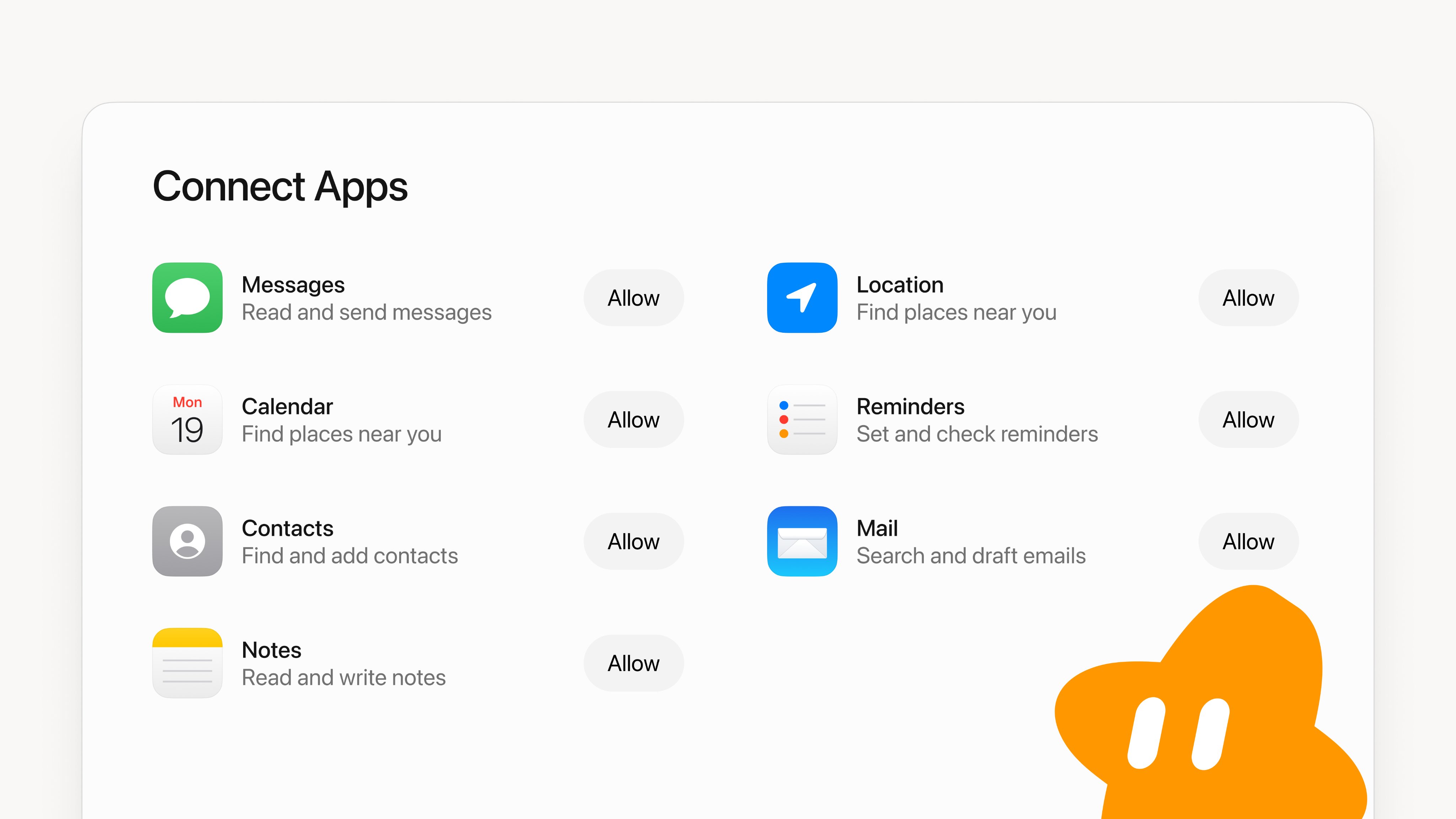
Image: xAI / SpaceXSI
What's now possible: Grok Bot can use Calendar, Reminders, Contacts, and more on iOS and Android (Oct 22). It can save your logins, cards, and contact information once and remember them (Oct 23). On Mac it can use Messages, Mail, Notes, Reminders, Calendar, Location, and Contacts (Nov 12). It can join personal or company Tailscale networks to reach private tools and apps (Nov 10).
What it means: The agent can now work with the same apps you use every day, not just a chat window.
Business use case (example scenario): A consultant tells her agent to find every client email from this week that asked for a meeting, check her calendar, and draft replies with open times.
9. Grok Bot Pages, video, Zoho CRM, Shop Pay, and X Money (Oct 22)
What's now possible: Bots can build Pages, such as reports, memos, and dashboards, that you edit together or have the bot keep up to date. They can create videos from a description or an image. They can connect to Zoho CRM, pay with Shop Pay, and connect X Money in one tap. Details are in the Grok Bot changelog.
Video: Matt Palmer, SpaceXSI (team demo of shopping cards and deals)
What it means: The agent produces finished work (a report, a video, a purchase), not just text.
Business use case (example scenario): A sales manager has a bot build a weekly pipeline dashboard from Zoho CRM that updates itself every Monday.
10. Claude Whiteboards, Sheets, and Data (Anthropic, Nov 10)
Video: Anthropic
What's now possible: Claude Whiteboards and Claude Sheets launched in beta, and Claude Dashboards became generally available as Claude Data. Claude can generate spreadsheets "with tabs, formulas, formatting, and drop-downs," and teams can certify the metrics everyone should use. Available on all paid plans.
What it means: Brainstorm, spreadsheet, and report all live in the same place as the AI that helped build them.
Business use case (example scenario): A restaurant group asks Claude for a hiring budget sheet by location, then shares it with each manager to fill in.
11. Claude Managed Agents self-hosted and Claude Code Projects (Anthropic, Nov 12 and 13)
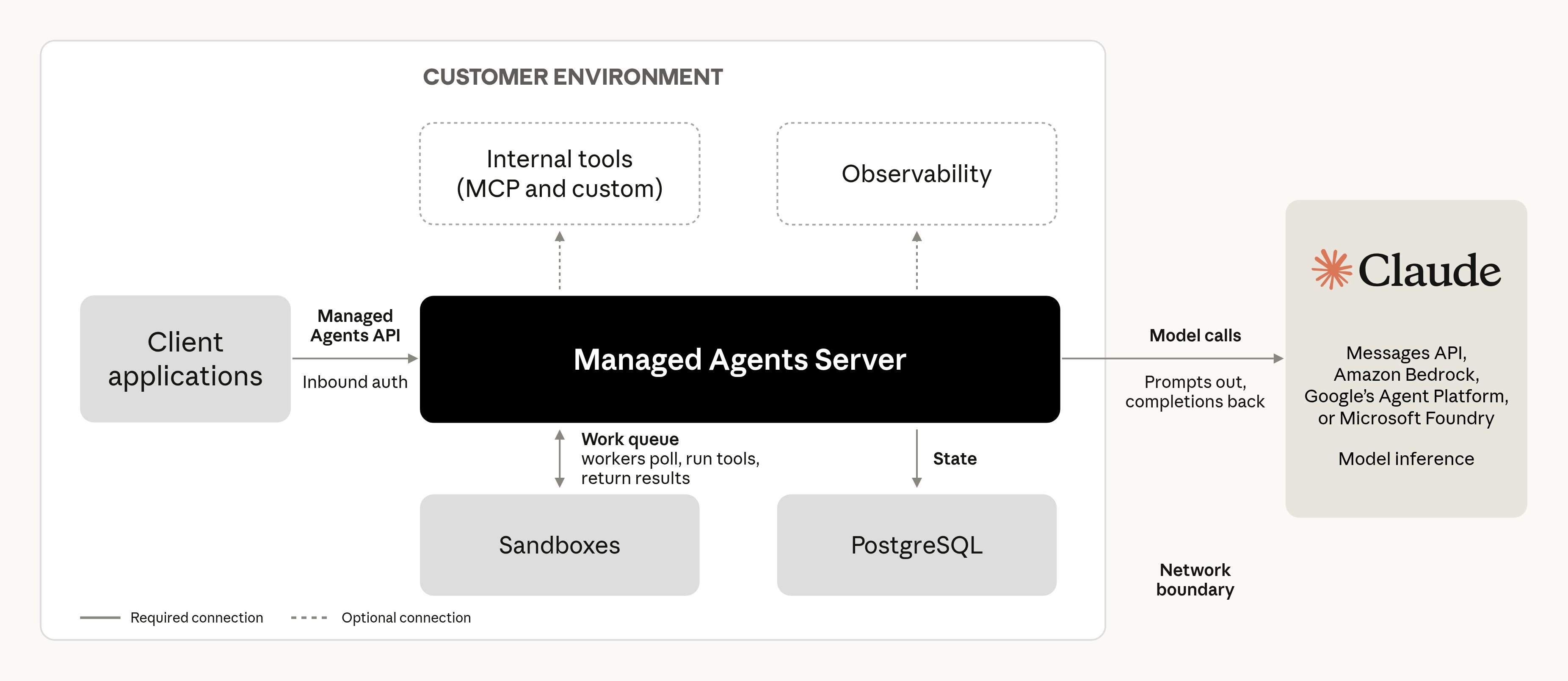
Image: Anthropic
What's now possible: Help Net Security reported that companies can now run Claude Managed Agents' harness, sandboxes, credentials, and session history in their own cloud or on-premise, in a private beta. Separately, Claude Code Projects lets one ongoing conversation coordinate a stream of related tasks as parallel threads, with an Overview of which finished and which need you.
What it means: Bigger companies with strict security rules can keep agent credentials and history inside their own walls. And one person can run many pieces of work at once with an agent coordinating them.
Business use case (example scenario): A software team drops each new bug report into one project. The agent starts a thread for each, and the lead reviews finished fixes in the morning.
12. Claude for teams and admins: usage reports, auto mode, and an open skills standard (late October)

Image: Anthropic
What's now possible: Claude Enterprise added smart reports, in-app surveys, and pooled group budgets (Oct 28), so admins can see what teams get done with Claude and what it costs. Claude announced that sessions across its apps would run in auto mode by default on Pro, Max, and Team plans, where "an automated check blocks risky actions" instead of asking you to approve every step (announced Oct 22). And Anthropic donated Agent Skills, the open format for teaching agents a specific task, to the Agentic AI Foundation under the Linux Foundation (Oct 22).
What it means: Agents are getting easier to manage, measure, and teach, and the way you package "how we do things here" is becoming a shared standard across tools.
Business use case (example scenario): An operations lead writes the company's refund process as a skill once, so any compatible agent the team uses follows the same steps.
13. OpenAI dots by text, now with GPT-6.1 Terra (late October to Nov 3)

Image: OpenAI (crop of the Sept 29, 2026 "Introducing dots" launch art)
What's now possible: Texting your dot is rolling out in beta to ChatGPT Pro users in the US, through iMessage or RCS, with text, photos, and voice messages. If the dot needs approval, it sends a link to review the request. On Nov 3 OpenAI added GPT-6.1 Terra to the models that power dots.
What it means: Your agent is now as easy to reach as a person in your contacts.
Business use case (example scenario): A field service owner texts his dot a photo of a job site from the truck and asks it to draft the estimate before he gets back to the office.
14. ChatGPT changes for work: Chat and Work tabs merging, Enterprise on AWS (Nov 2 and 9)
Image: OpenAI
What's now possible: TechCrunch reported, from an OpenAI email, that ChatGPT's Chat and Work tabs will merge, starting with select users. ChatGPT Enterprise is now available through AWS Marketplace, so companies can buy it on their existing AWS bill.
What it means: Less switching between modes, and an easier buying path for larger companies.
Business use case (example scenario): A mid-size company already on AWS adds ChatGPT Enterprise through its existing AWS account instead of starting a new vendor process.
15. The models underneath: Muse Ember, Gemini 4 Carbon and Hydrogen, Claude Fable and Mythos 5.2 (Nov 9 to 12)
Image: Meta (Muse app icon; Meta's personal agent product, not Muse Ember model art)
What's now possible: Meta released Muse Ember, its smallest and most efficient model, built for "the work agents repeat all day," at $0.10 per million input tokens. Google made Gemini 4 Carbon available to developers, enterprises, and Google AI Ultra subscribers (Nov 10), then introduced Gemini 4 Hydrogen, a faster model rolling out to everyone in the Gemini app and Google Search (Nov 12). Anthropic released Claude Fable 5.2 and Claude Mythos 5.2 (Nov 9), which it says generate outputs up to 30% faster than the 5.1 versions, at a lower price.
What it means: The engines behind agents keep getting faster and cheaper. Cheaper agent work means more companies will build agents into everyday products.
Business use case (example scenario): A software company that runs an agent for customer support moves the repetitive steps (sorting tickets, pulling order details) to a cheaper, faster model and keeps the expensive model for hard cases.
16. The SpaceX Super Intelligence Partner Network (Oct 22)

Image: xAI / SpaceXSI
What's now possible: SpaceXSI launched an official program for companies that build products and services with Grok, with Transformation Partners that help businesses deploy it and Marketplace Partners that build plugins and integrations. It said more than 130 companies took part in early access.
What it means: There's now an official ecosystem of firms that help businesses put these agents to work.
Business use case (example scenario): A regional accounting firm that wants agents in its workflow but has no technical staff looks for an accredited partner to set it up.
Where this leaves us
A month ago, most of this was a demo. Now people can sign up, connect their apps, and hand their agent real work.
Your customers are going to change how they find you, talk to you, and buy from you. Some will do it this year. Some never will. A business that serves both, and uses these same tools to run better, is in a strong spot.
Start small. Pick one thing from this list and try it this week. Get your information right. Answer every call. Then keep learning, because next month is going to bring another list.
What's the one change from this month you think affects your business the most?
Frequently asked questions
What changed with AI personal agents between October 15 and November 15, 2026?
OpenAI, Anthropic, Google, Meta, and SpaceXSI shipped a wave of personal-agent features. Agents can now send a morning brief, pay for a purchase with your approval, read your Google Wallet spending, make phone calls for you, join video calls, and use the apps on your phone and Mac. Businesses can also claim a profile in ChatGPT and launch their own Business Agent.
What is an AI personal agent?
An AI personal agent is software that watches your apps, makes phone calls, shops, joins meetings, and comes back to you with the work done and a question about what to approve. A chatbot waits for you to ask. An agent goes and does the task.
Can an AI agent buy something for me?
Yes, with your approval. ChatGPT Wallet, launched Nov 13, 2026, lets a dot pay on your behalf. You review the items, total, and card, then approve with Face ID or a fingerprint. A payment token is used, so your real card details aren't shared with the business or the agent. It is rolling out first to ChatGPT Pro subscribers 18 and older in the US, with American Express, Mastercard, and Visa.
Can an AI agent call my business?
Yes. On Oct 25, 2026, Elon Musk wrote that Grok Bot "can now call someone or a business for you, make a request on your behalf, take notes on the response and send you a note summarizing the conversation." That means some calls a business gets may be agents asking for availability, quotes, or bookings.
What does it mean that a business now has two kinds of customers?
This is my view, not a vendor claim. One customer sends an AI agent to research you, compare you, call you, and try to check out. The other still calls, texts, or walks in and wants a person. A business has to be easy to find, easy to understand, and easy to buy from for both.
What should a business do first to get ready for AI agents?
Start with your information. Make your hours, prices, services, policies, and product details accurate everywhere, because agents repeat what is published. Then claim your profile in ChatGPT if you are eligible, make sure site security and fraud tools aren't blocking legitimate agent purchases, answer every call, and keep a human path open.
Which of these AI agent features have plan or region limits?
As of Nov 15, 2026: Claude Duet is a waitlist preview for US Pro, Max, and Ultra subscribers. ChatGPT Wallet and texting your dot are for ChatGPT Pro users in the US. Business Agents are for eligible ecommerce and online service businesses in the US. Gemini with Google Wallet is for Gemini app users in the US. Claude Meetings is on Team and Enterprise plans, starting with Google Meet. Grok Bot meetings are on Team, Enterprise, and Ultra plans. Claude Whiteboards, Sheets, and Data are on all paid plans.
Sources: every product fact above links to the official announcement or the news report it came from. Business use cases are example scenarios, not customer stories. Product availability, plans, and regions are as of Nov 15, 2026. More posts are on the Extendly blog.